
 Facebook
 X
 Pinterest
 Copy Link
☕ Coffee with Regis
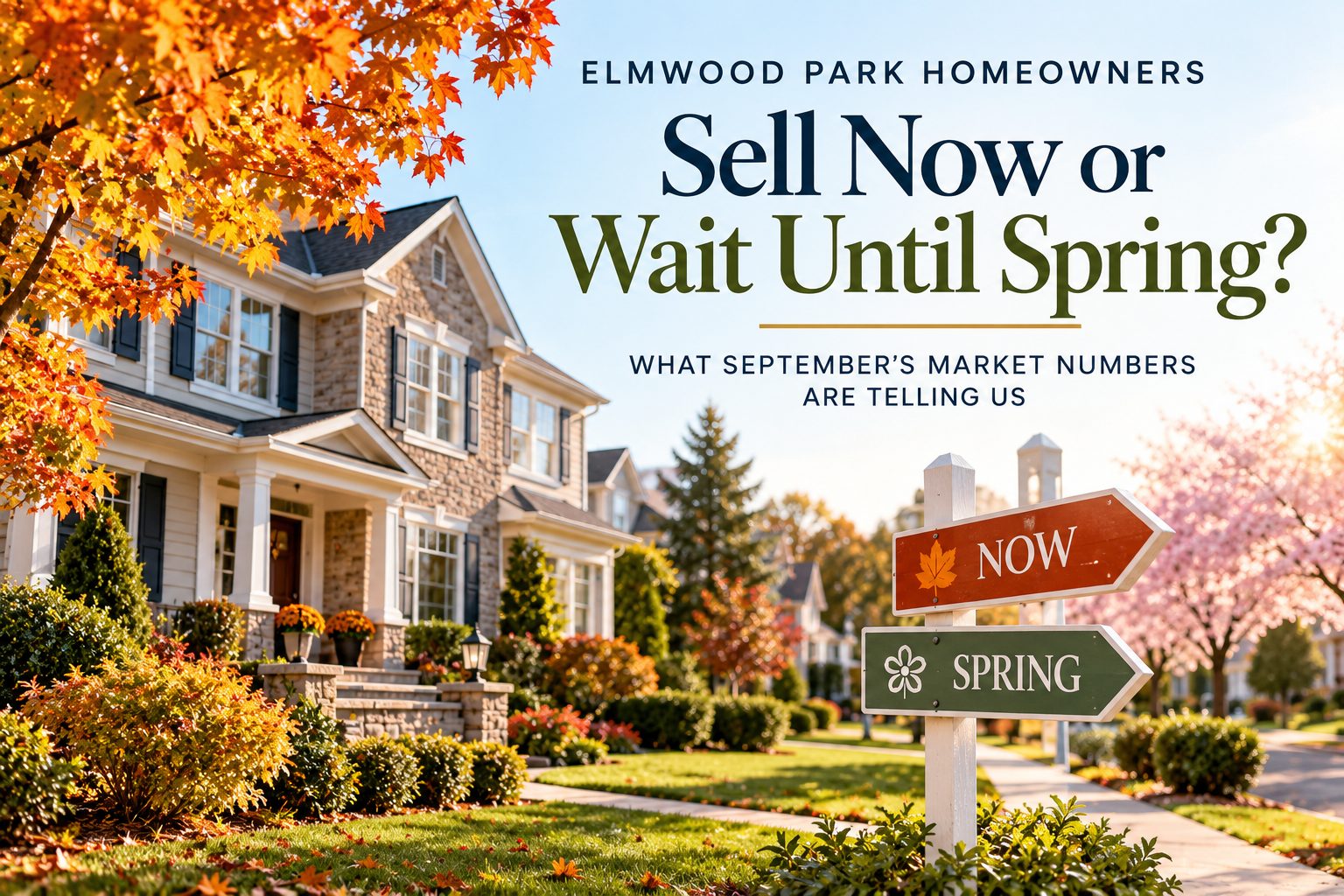
If you knew what your Elmwood Park home could sell for today, would that change your plans about waiting until spring?
Sometimes the best first step isn’t deciding to sell—it’s simply knowing your options.
If you own a home in Elmwood Park and you’ve been thinking about selling, you may be asking yourself a familiar question:
Should I sell now, or would I be better off waiting until spring?
Spring has traditionally been considered one of the strongest seasons for real estate. But that doesn’t automatically mean waiting is the right decision for every homeowner.
Real estate is local. And your decision should depend on more than the calendar.
Let’s look at what happened in the Elmwood Park market in September and what homeowners should consider before deciding.
What Is Happening in the Elmwood Park Real Estate Market?
The September 2026 NJMLS statistics give us a clearer picture of what’s happening right here in Elmwood Park.
During September:
- 16 properties sold
- The median sold price was $620,000
- The average sold price was $584,875
- Homes averaged 33 days on market
- The Sale-to-Original-List-Price ratio was 102.80%
- 28 new listings entered the market
- 10 properties went under contract
- There were 53 active listings
- Elmwood Park had approximately 3.31 months of inventory
What does this mean for homeowners?
One number I find particularly interesting is the 102.80% Sale-to-Original-List-Price ratio.
In simple terms, properties sold during September collectively averaged above their original asking prices.
That doesn’t mean every home will sell over asking price. Condition, location, property type, pricing and buyer demand all matter.
But it does tell us something important:
Buyers are still competing for the right Elmwood Park properties.
What Does 3.31 Months of Inventory Mean?
This is another number that Elmwood Park homeowners should understand.
Months of inventory gives us an idea of how long it could take the existing supply of homes to sell if no new properties came onto the market and sales continued at the current pace.
Elmwood Park had approximately 3.31 months of inventory in September.
Generally, lower inventory means buyers have fewer properties to choose from, while higher inventory gives buyers more options.
For a homeowner considering selling, the important question becomes:
How much competition would my particular home face if I listed it today?
The answer depends on more than Elmwood Park’s overall inventory.
A three-bedroom home in one price range may face very different competition than a multifamily property, condominium, or larger home in another price range.
That’s why looking at your home’s direct competition is so important.
But Aren’t Homes Easier to Sell in the Spring?
Spring traditionally brings increased real estate activity.
More buyers may enter the market. Families may want to move before the next school year, daylight hours are longer, and homes often show beautifully once spring arrives.
But there’s another side to the spring market:
More homeowners may decide to sell, too.
That means your home could be competing with more listings for buyers’ attention.
Waiting for spring isn’t necessarily wrong.
But waiting simply because you’ve heard that spring is “the best time to sell” isn’t a complete strategy.
One Potential Advantage of Selling Before Spring: Less Competition
Imagine that a qualified buyer wants to live in Elmwood Park.
They need three bedrooms, want to remain within a particular budget, and prefer a location convenient to transportation, schools, or their commute.
If only a few available homes meet those criteria, each property has an opportunity to stand out.
If more homeowners list their properties in spring, that same buyer may suddenly have considerably more choices.
This is why I encourage homeowners to look at their competition today, rather than simply looking at the season.
How many homes similar to yours are currently for sale?
How many have recently gone under contract?
How long did comparable properties take to sell?
And most importantly:
What did buyers actually pay for homes similar to yours?
Those questions tell us much more about your opportunity than the month on the calendar.
What About Mortgage Rates?
Mortgage rates are another important part of today’s housing market.
Rates affect affordability, and when borrowing costs rise, buyers often pay even closer attention to purchase price and monthly payment.
But if you’re considering selling, mortgage rates shouldn’t be viewed in isolation.
There are really two sides to your decision:
What could I receive for my current home?
and
What will my next move cost me?
If you’re planning to sell and purchase another property, we should consider your estimated equity, potential sale proceeds, next-home price, financing, and monthly payment together.
Trying to predict exactly where mortgage rates will be next spring is difficult.
Your decision should be based on the information we have today and how it fits your personal plans.
What If I Wait Until Spring?
Waiting may absolutely make sense.
Perhaps your home needs repairs.
Maybe you want several months to declutter, paint, or prepare the property.
Perhaps you’re waiting for a personal, financial, or family milestone.
Or maybe spring simply works better with your timeline.
Those are good reasons to wait.
But there’s an important difference between:
Choosing to wait because it supports your plan
and
Waiting because you assume your home will automatically sell for more in spring.
No one can guarantee what home prices, inventory, buyer demand, or mortgage rates will look like several months from now.
What If I Sell Now?
Selling before spring may be worth considering if:
- There are relatively few homes directly competing with yours.
- Recent comparable sales support a price that meets your goals.
- You already know where you want to move.
- You have substantial equity in your property.
- Your home is ready—or can quickly be prepared—for the market.
- Your personal timeline makes moving now more convenient.
September’s Elmwood Park numbers give homeowners another reason to at least explore the possibility.
With a $620,000 median sold price, a 102.80% Sale-to-Original-List-Price ratio, and 3.31 months of inventory, there is enough activity in the local market to make the conversation worthwhile.
That doesn’t mean everyone should sell.
It means homeowners shouldn’t automatically assume they need to wait.
So, Should You Sell Now or Wait?
There isn’t one answer for every Elmwood Park homeowner.
And that’s actually the point.
Instead of asking:
“Is fall or spring the perfect time to sell?”
I would ask:
“Which timing gives me the best opportunity based on my home, my finances and what I want to do next?”
Before deciding, look at three things:
- What your home could realistically sell for today.
- How much direct competition your home currently has.
- What your financial picture would look like after the sale.
Once you know those numbers, deciding whether to move now or wait becomes much easier.
Thinking About Selling Your Elmwood Park Home?
You don’t have to be ready to put a For Sale sign in your yard to start gathering information.
If you’re wondering whether selling now or waiting until spring makes more sense, I can help you look at recent Elmwood Park sales, your current competition, and an estimated market range for your property.
Then you can decide what works best for you.
No pressure. Just local information to help you decide.
Regis De la Cruz
Coldwell Banker
Your story leads. I guide you.
